
Read Lincoln County's Current Owner Record
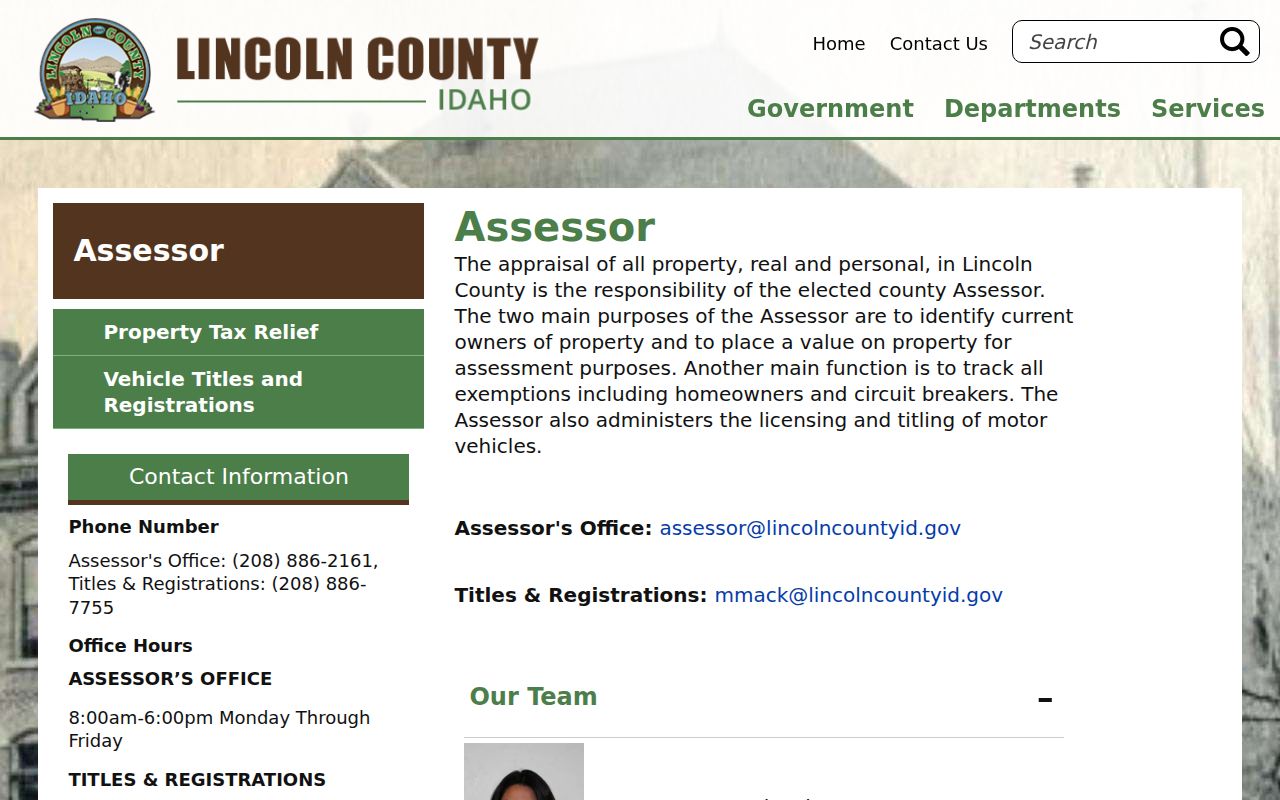
Lincoln County keeps its owner-of-record answer with the Assessor. The Lincoln County Assessor identifies current owners, values parcels, and tracks exemptions. Its request form asks for three exact fields: Parcel Number, Address of Parcel, and Owner. Three fields, one card. No fixed web-search address is published. No guaranteed update interval is published either. Save the source and date of every answer. The official Assessor page is the county entry point for this current-owner check.
The assessor holds the record; the deed confirms it.
| Owner | The person or entity carried on the assessment roll. |
|---|---|
| Mailing address | Where assessment and tax correspondence is sent. |
| Address of parcel | The situs, or physical location of the land. |
| Parcel number | The exact join key for GIS, assessor, permit, and tax material. |
| Value report | The ProVal property valuation report available by request. |
| Deed reference | A recording clue to verify with the Clerk/Recorder. |
An owner of record is not always the occupant. A mailing address may be a post office box, an out-of-county address, or the office of an LLC or trustee. Treat it as a contact clue. It does not prove the owner lives at the Lincoln County situs. An exemption can support an assessment status. But the deed remains the real evidence of the transfer.
Request One Lincoln County Owner at a Time
The assessor's form sets a firm limit: “ONE PARCEL PER REQUEST FORM.” Each request can return a ProVal Property Valuation Report, an aerial parcel map, or another stated record. Reproduce the complete parcel number. Include the full parcel address. Ask for the Owner field. This avoids the confusion of common names. It also respects the county's warning that it cannot release a list usable as a mailing list under Idaho Code § 74-120.
Send the focused request to the Assessor at Suite A, 111 W B Street, Shoshone. Electronic delivery is the default. Under the form's terms the first 100 black-and-white letter or legal pages are free, with a per-page charge after that. Expect a response within three working days, or notice of an extension. The current Idaho Public Records Act guidance supplies the broader statutory rules. Consult both sources.
Note: A parcel-specific request checks one owner, while a broad list may hit legal limits and extra work.
Separate Lincoln County Situs and Owner Mail
A situs address identifies the land itself. An owner mailing address shows where notices go. In Lincoln County the two lines often differ. Rural land, trusts, estates, entities, and absentee owners can all receive mail elsewhere. Record both exactly, with post office box and ZIP details. Never silently swap one for the other when comparing a parcel card, deed, permit, or tax notice.
The distinction also resolves false conflicts. A building permit may show an assigned site address, an applicant, and a contractor, while the roll shows a different owner and mailing address. The applicant may belong to the project without being the current owner. The deed's legal description and the assessor parcel number are stronger joins. A person's address alone is weaker.
Check Entity Names on Lincoln County Parcels
An owner line may name an LLC, trust, estate, or personal representative. It may not list an individual at all. Search the recorded name exactly, then test punctuation-free and abbreviated forms. For an Idaho company, the Secretary of State SOSBiz search can distinguish entities. It can also show public business-filing context. That context does not rewrite the land record. It simply identifies the entity.
A trust may list a trustee rather than beneficiaries. An estate can stay on the roll while probate and a later deed are pending. A life estate splits present rights from a future interest. In each case, preserve the exact owner wording. Then turn to the latest recorded instrument. Do not guess at the people behind the name.
- Owner of record
- The party carried as owner in the current official record.
- Assessment roll
- The assessor's parcel, owner, and value record used for taxation.
- Situs
- The physical property address, distinct from owner mail.
- Recording lag
- The period between a transfer and its appearance in another office's system.
Confirm Lincoln County's Current Owner
A sound conclusion compares two records. The assessor roll is the quickest owner-of-record source. The newest deed filed with the Lincoln County Clerk / Ex-Officio Auditor and Recorder is the transfer evidence. No public grantor-grantee index or online image portal exists. Simplifile records documents electronically for submitters, not as a public history search.
- Obtain the Owner, address, and parcel number from the Assessor or parcel report.
- Ask the Clerk/Recorder for the most recent deed affecting that exact legal description or parcel.
- Compare the deed's grantee, recording date, and legal description with the assessment entry.
- If an entity appears, use its exact legal name in SOSBiz and in the recorder request.
- Keep the response date and owner mailing address with the research notes.
Recent-sale caution. Lincoln County publishes no fixed roll-refresh interval. A newly recorded deed may name the current owner before the assessor record changes.
Use Lincoln County GIS as a Second Path
GIS gives you a second route in. The county's Tax Parcel Viewer documentation spells out its search tools. You can search by owner name, parcel ID, or property address. Each parcel detail page points to a Property Record Card, Land Report, Sales History, and Historical Deeds. Bookmarking an old viewer link backfires. The launch address shifts between releases. So begin at the Assessor page and open the live viewer from there.
GIS earns its keep on hard cases. A rural address, a misspelled owner name, or a parcel number already in hand all fit its strengths. Owner Name searches want the surname first with no comma. Autocomplete plus wildcards soften typos. Still, the data is compiled for tax purposes. Treat the displayed owner as a lead back to the current roll and the deed. It is not a substitute for either.
Resolve a Recent Lincoln County Sale Gap
Sellers sometimes linger on the roll after closing. Dates sort it out. Log the day you pulled the roll, the deed's execution and recording dates, and any later correction instrument. A tax notice or permit can lag behind. The newest valid recorded transfer is the better clue, and the assessor can say when its own record will be revised.
The deed may not be online. Request it from clerks@lincolncountyid.us or the Records Office at 111 W B Street, Shoshone, ID 83352. Name the grantor, grantee, parcel, and instrument type. Add the legal description and a tight date range. The county form's delivery options include email, mail, requester-supplied storage media, and pickup.
Note: A missing public deed index is an access gap, not proof that Lincoln County failed to record the transfer.
Use Lincoln County Owner Records Lawfully
Lincoln County owner records have real limits. The public mailing address supports a good-faith letter about a boundary, easement, purchase inquiry, or shared property concern. It does not prove anyone lives there. Never use it to guess who occupies the property. Idaho's Address Confidentiality Program can substitute a mailing address for qualifying survivors, so treat a protected address as off limits rather than a puzzle to solve.
Lawful use. Use Lincoln County current-owner information for legitimate property research. Never use it to stalk, harass, intimidate, or expose a protected person.
Start with the right question. The assessor's owner field answers an administrative one. For a legal conclusion about title, order a certified recorder copy and talk to a title professional or attorney. Title can hide unrecorded interests, probate, life estates, corrections, or litigation the roll never explains. Then build a dated worksheet. Give each source its own row. On the assessor row, capture the owner wording, parcel number, situs, mailing address, value-report date, and deed reference. The deed row gets grantee, grantor, recording date, book-page reference, and legal description. A third row can hold entity or probate context. Keeping sources apart stops one office's newer date from looking like a countywide update.
Turn to GIS when an address fails. Its documented fields include owner name, property address, parcel ID, subdivision and lot, neighborhood, deed and plat book-page, sales, and street centerline. Search owner names surname first, with no comma. Try entity and estate variants too. Once a candidate parcel appears, go back to the parcel-specific assessor route. The county's one-parcel form is your quality check, because it ties the answer to a single tract. Mailing labels can mislead. Lincoln County spans Shoshone, Richfield, Dietrich, and rural communities. A Shoshone mailing city does not put the parcel inside Shoshone. The county zoning map shows cities, areas of impact, and township-range geography for that boundary question. Use USPS only to check delivery formatting. Rely on GIS and legal descriptions for land identity.
Other records can corroborate a parcel without replacing the owner record. A permit applicant or contractor may not own the site. A tax-deed or sheriff notice describes a dated process. It may warn of redemption periods or unclear title. Probate may name a personal representative before any deed vests the next owner, so read each record only for the narrow fact it documents. Conflicting sources call for targeted questions. Send the Assessor the exact parcel and ask which owner and record date its answer reflects. Send the Clerk/Recorder the parcel, legal description, parties, instrument type, and date window. Keep both replies. The county publishes no fixed lag, so report the dates you have instead of assuming a standard turnaround.
Entities need their own check. The Idaho Secretary of State business search shows whether an LLC name is active and separates similarly named entities. Its public agent information is not land-title evidence. Match the exact entity in the deed and assessor record. If punctuation, abbreviation, or a later amendment differs, keep each version and ask the Recorder to search the alternatives. A deceased owner adds probate questions. Fifth Judicial District probate records can explain the gap before the roll changes. Idaho iCourt supplies case information, while the filed documents stay with the local clerk or a courthouse kiosk. A personal representative, heir, or beneficiary is not the current owner until the legal process and a recorded transfer say so.